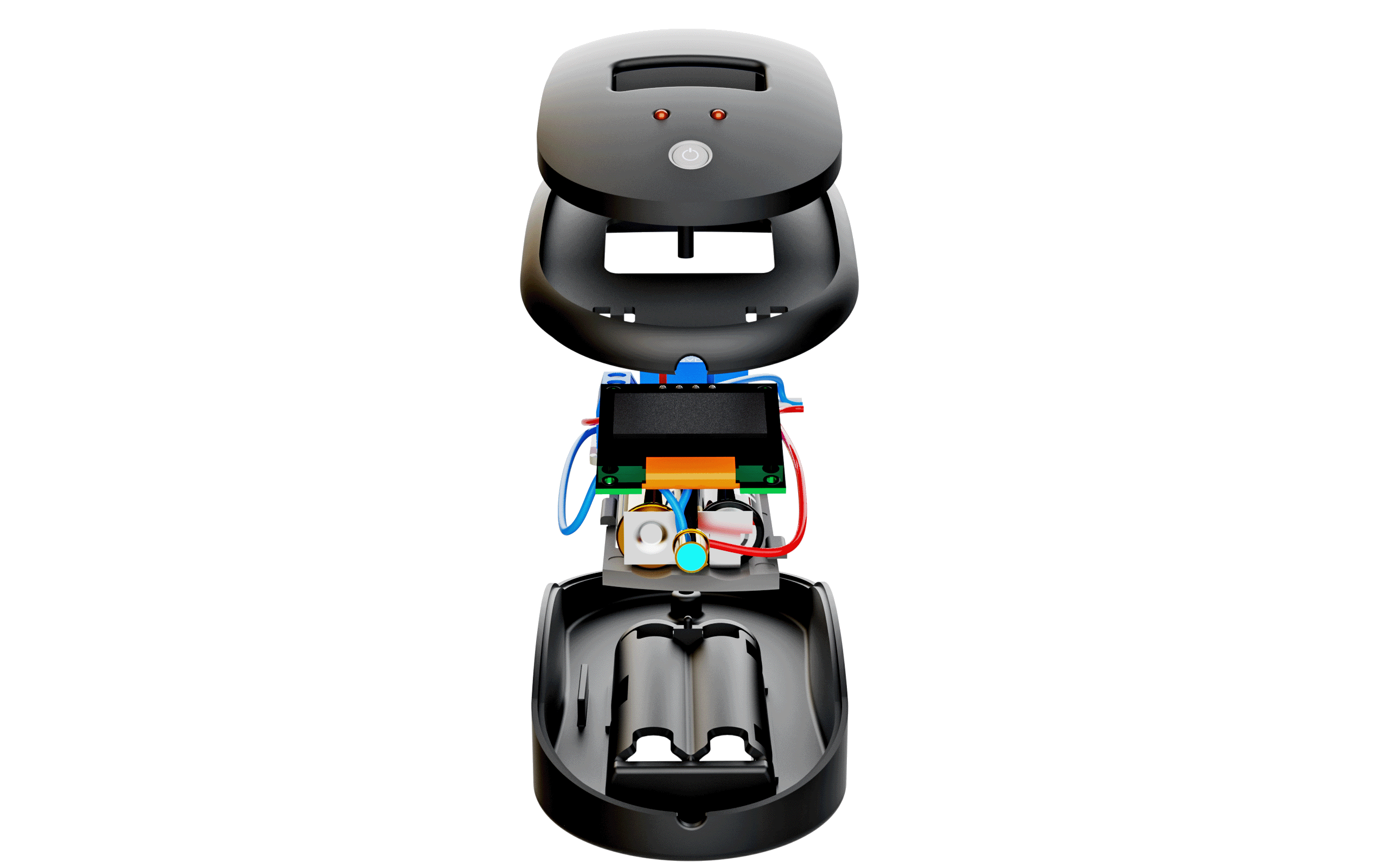
Design for Manufacture (DFM)
We believe design is a platform for change, and by using bold, ambitious thinking, we create value by creating opportunity.
OUR DESIGN FOR MANUFACTURE SERVICES
Most clients come to us with a design that works, but costs too much to make. Here is how we bring the number down.
Review+ Optimise+ Tolerance+ Consolidate+ Handover+
A design that works isn’t the same as a design that pays. We work with startups and manufacturers across Australia to strip cost and risk out of a product before the tooling money gets committed.
From prototype to a part that pays.
The gap between a prototype that works and a product that makes money is usually manufacturing cost. A part that prints fine on a 3D printer can be a nightmare in a mould. A design with forty fasteners assembles slowly and ships late.
DFM is where we find the money. We go through the design feature by feature, the undercut that adds a slide to the tool, the wall that’ll sink, the tolerance that’s tighter than it needs to be, the five parts that could be one. Each change is small. Together they decide whether your unit cost works at volume.
WHY CLIENTS
COME BACK
We design for the quote, not just the CAD.
A model can look production-ready and still carry cost nobody planned for: an undercut that needs a side-action, a finish that doubles the cycle time, a tolerance that only one shop in the country can hold.
We review every feature against the process that will actually make it. The design that leaves us is one a supplier can quote without a list of caveats, which is usually where the real savings show up.
We take cost out before the tooling locks it in.
Once a mould is cut, most of your unit cost is fixed. The cheapest time to fix an expensive design is before that steel gets machined.
We find the savings early: fewer parts, simpler tools, materials that are actually stocked here. Moving a gate or merging two components in week three is free. Doing it after tooling means a new tool.
We match the design to how it's really made.
Every process has rules, and a design that ignores them gets more expensive or fails outright. Injection moulding, CNC, sheet metal and die casting each want the geometry a specific way.
We’ve designed across all of them, so the draft angles, radii, bend reliefs and wall sections are right for your process from the start. Your supplier gets a part that suits their machines instead of one they have to fight.
One team from design to production.
DFM often sits in a gap: the design agency has moved on and the manufacturer only flags problems after quoting. That back-and-forth burns weeks.
At Oxta the people who optimise the design also produce the drawings and brief the supplier. We can prototype a change to prove it works before it’s committed, so the handover to production is clean.
Oxta Design has been fantastic to work with. They have a great understanding of what they do and have high expertise in their field. We have worked together for the last 7 months to develop a product for my company. In addition to creating product drawings, 3D renderings, and production drawings, they have also provided recommendations and suggestions to make it all possible. The communication has been great, and it has been a pleasure to work together.
Øystein Sætre Amundsen
Founder Happy Tuts
Products we have taken from idea to reality.
Most clients come to us with a problem, not a brief. Some have a sketch. Some have a sentence. Here is what we do with it.
What is Design for Manufacture (DFM)?
Design for Manufacture (DFM) is the practice of adjusting a product’s design so it can be made reliably and at the lowest sensible cost, using the intended manufacturing process. At Oxta this means reviewing every feature, wall thickness, draft angle, tolerance and fastener, against how the part will actually be moulded, machined or fabricated, then removing the cost and risk before tooling is committed.
What's the difference between DFM and DFA?
DFM (Design for Manufacture) focuses on making each individual part cheaper and more reliable to produce. DFA (Design for Assembly) focuses on making the whole product faster and simpler to put together, usually by cutting part count. We apply both together, because a part that’s cheap to make but slow to assemble hasn’t actually saved you money.
How much can DFM save on production costs?
It varies by product, but well-run DFM commonly removes a meaningful share of unit cost through part consolidation, simpler tooling and better material choices. The bigger saving is often risk: catching a moulding or tolerance problem before the tool is cut avoids a costly recut and weeks of delay.
When should DFM happen in the product development process?
As early as possible, and definitely before tooling is ordered. Once a mould is machined, most of your unit cost is locked in. Running DFM at the concept or prototype stage is where changes are cheapest, though we can also review a design that’s already close to production.
Which manufacturing processes do you design for?
Injection moulding, CNC machining, sheet metal fabrication, die casting and additive manufacturing. Each has its own rules for draft, wall thickness, radii and tolerances, and we design the part to suit the specific process you’ll use.
Do you work with our existing manufacturer?
Yes. We can optimise your design to your chosen supplier’s capabilities and hand over supplier-ready drawings, BOMs and STEP/IGES files. If you don’t have a manufacturer yet, we can introduce trusted Australian and offshore partners.
Can you do DFM on a design we already have?
Yes. Many clients come to us with a finished design that’s quoting too high or failing at the supplier. We review it, find the cost and manufacturability problems, and deliver a revised, production-ready design and drawing set.
What do we receive at the end of a DFM project?
A production-ready design plus full documentation: dimensioned drawings with GD&T to AS 1100, a Bill of Materials, and neutral files (STEP, IGES, DXF) ready for supplier quoting. Where useful, we validate changes with a prototype first.
Who owns the design and files?
You do. Everything we produce belongs to you once the project is paid. We sign an NDA before any discussion begins and keep no rights to your work.